
Delicious Pancit Bihon: A Flavorful Filipino Comfort Dish
Last Updated on May 8, 2026 by venlarecipez
As I stood in my kitchen, the delightful aroma of sautéing garlic filled the air, transporting me back to gatherings filled with laughter and warmth. It’s moments like these that remind me of the joy that comes from preparing traditional dishes, and for me, nothing embodies that sentiment quite like Pancit Bihon. This beloved Filipino noodle dish is not just a meal; it s an experience a celebration of umami flavors, tender pork, and vibrant vegetables all coming together in one comforting bowl. Whether you’re new to Filipino cuisine or looking to bring a taste of home to your table, this easy-to-follow recipe will awaken your taste buds and impress your family. Grab your ingredients, and let s bring this flavor-packed delight to life!
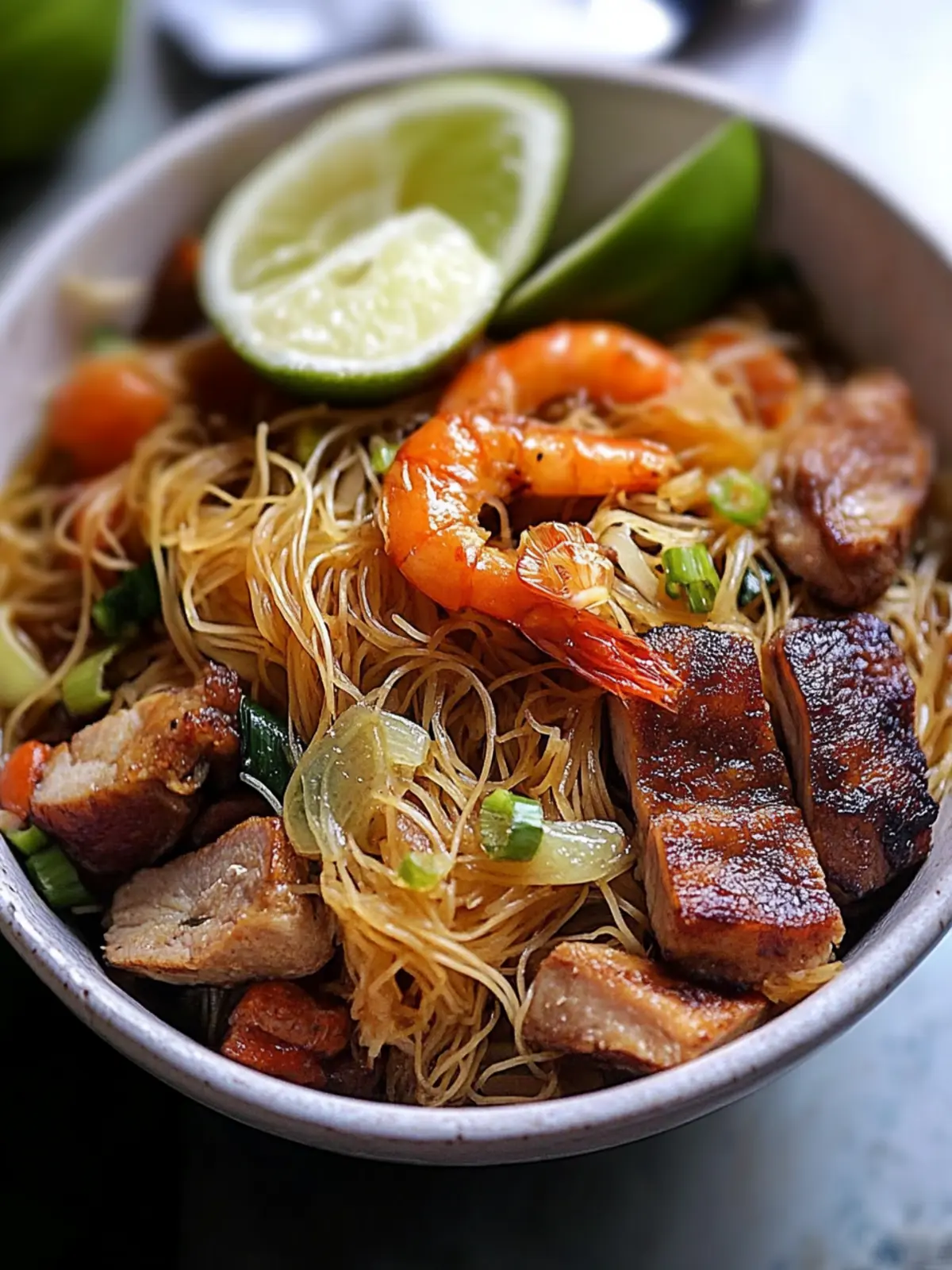
Why is Pancit Bihon a Must-Try?
Rich Tradition: Each bite of Pancit Bihon is a flavorful nod to Filipino culture, often served at special occasions to symbolize long life.
Easy to Make: This dish involves simple steps, making it accessible for cooks of all levels.
Bursting with Flavor: A medley of umami-rich ingredients creates a savory experience that’s hard to resist.
Versatile: Whether you prefer pork, chicken, or even tofu, this recipe easily adapts to your taste or dietary needs.
Crowd Pleaser: Perfect for family gatherings, it will wow your guests and leave them asking for seconds! Don t forget to check out our variation ideas to customize it further!
Pancit Bihon Ingredients
For the Pork
Skin-on Pork Shoulder or Pork Belly Provides rich flavor and tender texture when cooked. Substitute with chicken for a lighter option.
Water Base for cooking the noodles and meat. No substitutions needed.
Low-Sodium Soy Sauce Adds a salty and umami depth to the dish. Use tamari for a gluten-free version.
Ginger (2″ piece, sliced) Adds warmth and aromatic notes. Fresh ginger is preferred; dried is less effective.
Fish Sauce (1 Tbsp) Enhances the savory profile distinctly found in Filipino dishes. Omit for a vegetarian version or use soy sauce instead.
Bay Leaves (2) Infuses the broth with an aromatic flavor. No substitutions needed.
Star Anise Pods (2) Provides a sweet and aromatic profile. Substitute with a pinch of five-spice if unavailable.
For the Cooking
Refined Coconut Oil (2 Tbsp) For frying; adds a hint of tropical flavor. Can replace with vegetable oil.
For the Vegetables
Shredded Green Cabbage (2 cups) Adds crunch and nutrition. Substitute with bok choy.
Small Red Onion (thinly sliced) Offers sweetness and depth. Use yellow onion as an alternative.
Large Carrot (halved and thinly sliced) Provides sweetness and color. No substitutions needed.
Garlic (8 cloves, quartered) Essential aromatic that enriches the dish. More garlic can be added for stronger flavor.
Scallions (cut into 1″ pieces) Adds fresh onion flavor and color. Chives can be a substitute.
For Seasoning and Flavor
Kosher Salt (1 tsp) Essential for enhancing flavors. Adjust according to dietary needs.
Freshly Ground Black Pepper (1 tsp) Adds warmth and spice. White pepper can be used as an alternative.
White Pepper (1/4 tsp) Enhances flavor with a sharper profile. Omit if unavailable.
For the Noodles
Rice Vermicelli Noodles (6 oz) The main carbohydrate of the dish. Substitute with any thin noodle or spaghetti in a pinch.
For the Finishing Touch
Calamansi or Fresh Lemon Juice (1 Tbsp) Offers a tangy brightness to finish. Use lime if calamansi is unavailable.
Fried Garlic (optional) For a crunchy garnish. Can omit if desired; use fresh herbs instead for garnish.
Calamansi, Lemon, or Lime Wedges For serving; adds freshness.
Embrace the joy of cooking with this Pancit Bihon recipe that brings a delightful taste of Filipino cuisine to your table!
How to Make Pancit Bihon
Cook Pork: Start by simmering the skin-on pork in water with soy sauce, ginger, fish sauce, bay leaves, and star anise for 25 minutes until tender. The aroma will fill your kitchen with warmth!
Prep Veggies: While your pork is cooking, take a moment to slice the cabbage, onion, carrot, garlic, and scallions. This ensures everything is ready to go when the time comes to combine.
Fry Pork: After simmering, heat coconut oil in a skillet and cook the pork until it’s golden brown and crispy. Cover with a lid to prevent splatter, and give it some gentle shakes to avoid sticking.
Cook Noodles: In that wonderful broth from the pork, soak the rice vermicelli noodles until they fully absorb the liquid and become tender this usually takes about 5-7 minutes.
Combine & Serve: Fold in those delicious veggies and drizzle calamansi or lemon juice over the top. Serve it up warm, garnished with fried garlic for that extra crunch your family will love it!
Optional: Serve with lime wedges for a refreshing twist.
Exact quantities are listed in the recipe card below.
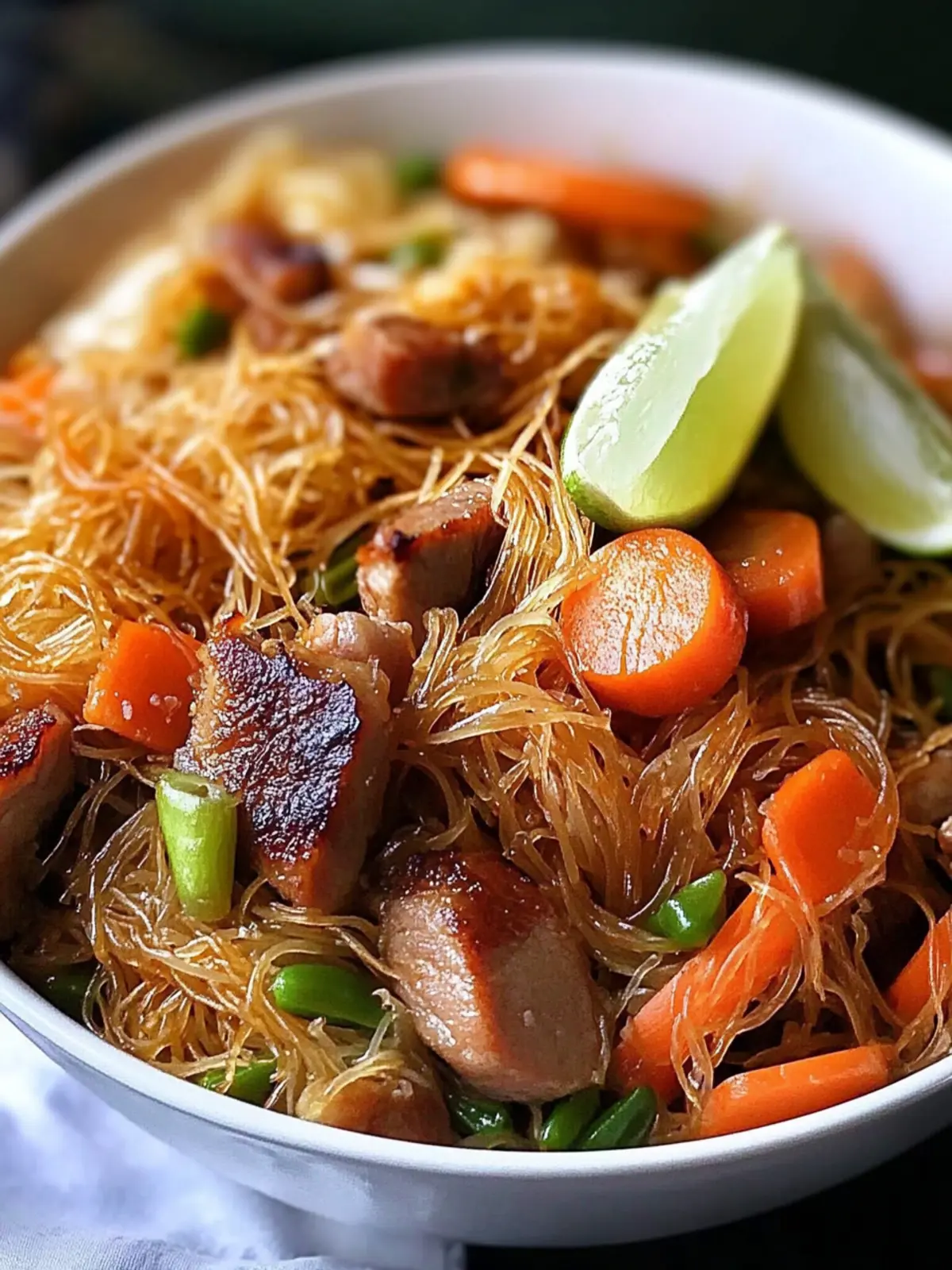
How to Store and Freeze Pancit Bihon
Fridge: Store leftover Pancit Bihon in an airtight container in the refrigerator for up to 3 days. Reheat gently on the stove with a splash of broth or water to prevent drying out.
Freezer: For longer storage, freeze Pancit Bihon in a freezer-safe container, ensuring it s well-sealed, for up to 2 months. Thaw in the fridge before reheating.
Reheating: When ready to enjoy, reheat on the stovetop over low heat, adding a bit of broth or water to restore moisture and freshness to the noodles.
Make-ahead: Consider preparing Pancit Bihon a day in advance for gatherings; refrigerate and simply reheat for a quick, flavorful meal when needed.
What to Serve with Pancit Bihon?
As you savor the mouthwatering flavors of this Filipino noodle dish, think about beautifully complementing sides and beverages to create a delightful meal experience.
Steamed Veggies: Fresh, lightly salted vegetables like broccoli and snap peas add a crisp contrast that balances the savory noodles.
Garlic Fried Rice: This beloved Filipino side dish enhances the meal’s umami notes and ensures every bite is flavorful and hearty.
Lumpia (Spring Rolls): These crispy, filled rolls provide a delightful crunch, making them the perfect finger food to enjoy alongside your Pancit Bihon.
Spicy Vinegar Dipping Sauce: A tangy and spicy vinegar sauce will cut through the richness of the dish, adding an exciting kick.
Filipino Fruit Salad: A refreshing medley of fruit can cleanse the palate; the sweetness of the fruits perfectly accents the savory flavors of the noodles.
Calamansi Juice: This traditional drink brings a tart and refreshing brightness that pairs beautifully with the umami profile of your Pancit Bihon, enhancing your dining experience.
Coconut Pandan Cake: For dessert, this moist cake offers a light sweetness and aromatic notes, perfectly finishing your meal with a touch of tropical bliss.
The right pairings can elevate your Pancit Bihon gathering into an unforgettable culinary experience!
Expert Tips for Pancit Bihon
Choose the Right Pork: Select skin-on pork shoulder or belly for optimal flavor. Avoid using overly lean cuts as they may dry out.
Soak Noodles Properly: Allow the rice vermicelli noodles to soak in the broth until fully absorbed. This ensures they become tender and flavorful.
Adjust Seasoning Last: Always taste and adjust the seasoning towards the end of cooking. This is essential for achieving well-balanced flavors in your Pancit Bihon.
Avoid Overcrowding: When frying the pork, ensure not to overcrowd the skillet. This promotes better browning and crispiness.
Garnish for Crunch: Add fried garlic as a topping for texture. For a fresh touch, consider using chopped scallions or herbs instead.
Make Ahead Options
Pancit Bihon is a fantastic recipe for meal prep, allowing busy cooks to streamline dinner plans! You can prep the pork by simmering it with the broth ingredients and refrigerating it for up to 3 days. Slice and store the vegetables (cabbage, onion, carrot, garlic, scallions) in airtight containers in the fridge for up to 24 hours to maintain their crunch. When you’re ready to serve, simply take the pork out, reheat it in a skillet, soak the rice vermicelli noodles in the fragrant broth, and toss in the prepped vegetables. The final result will still be just as delicious, saving you time without compromising flavor!
Pancit Bihon Variations & Substitutions
Feel free to mix things up and make this dish truly yours with these delicious ideas!
Gluten-Free: Substitute low-sodium soy sauce with tamari for a gluten-free version that maintains the umami flavor.
Vegetarian Delight: Omit the fish sauce and replace pork with tofu or tempeh for a hearty vegetarian option rich in protein.
Seafood Twist: Add fresh shrimp or crab to elevate the dish, giving it a taste of the sea and extra flavor depth.
Spicy Kick: Incorporate sliced jalapeños or crushed red pepper flakes for a bit of heat to make your taste buds dance.
Veggie Medley: Toss in colorful bell peppers, snap peas, or mushrooms to enhance crunch and nutrition, creating a vibrant bowl that s a feast for the eyes.
Coconut Infusion: Use coconut milk instead of water for cooking the noodles for a rich, creamy twist that adds a tropical flair.
Noodle Swap: If you can t find rice vermicelli, feel free to substitute with any thin egg noodles or even spaghetti in a pinch; the flavor will still shine through.
Zesty Finish: Use lime or grapefruit juice instead of calamansi for a tangy twist that brightens the overall flavor profile with a refreshing zing.
Each variation brings its own charm, ensuring that your Pancit Bihon remains a delightful experience with every meal!
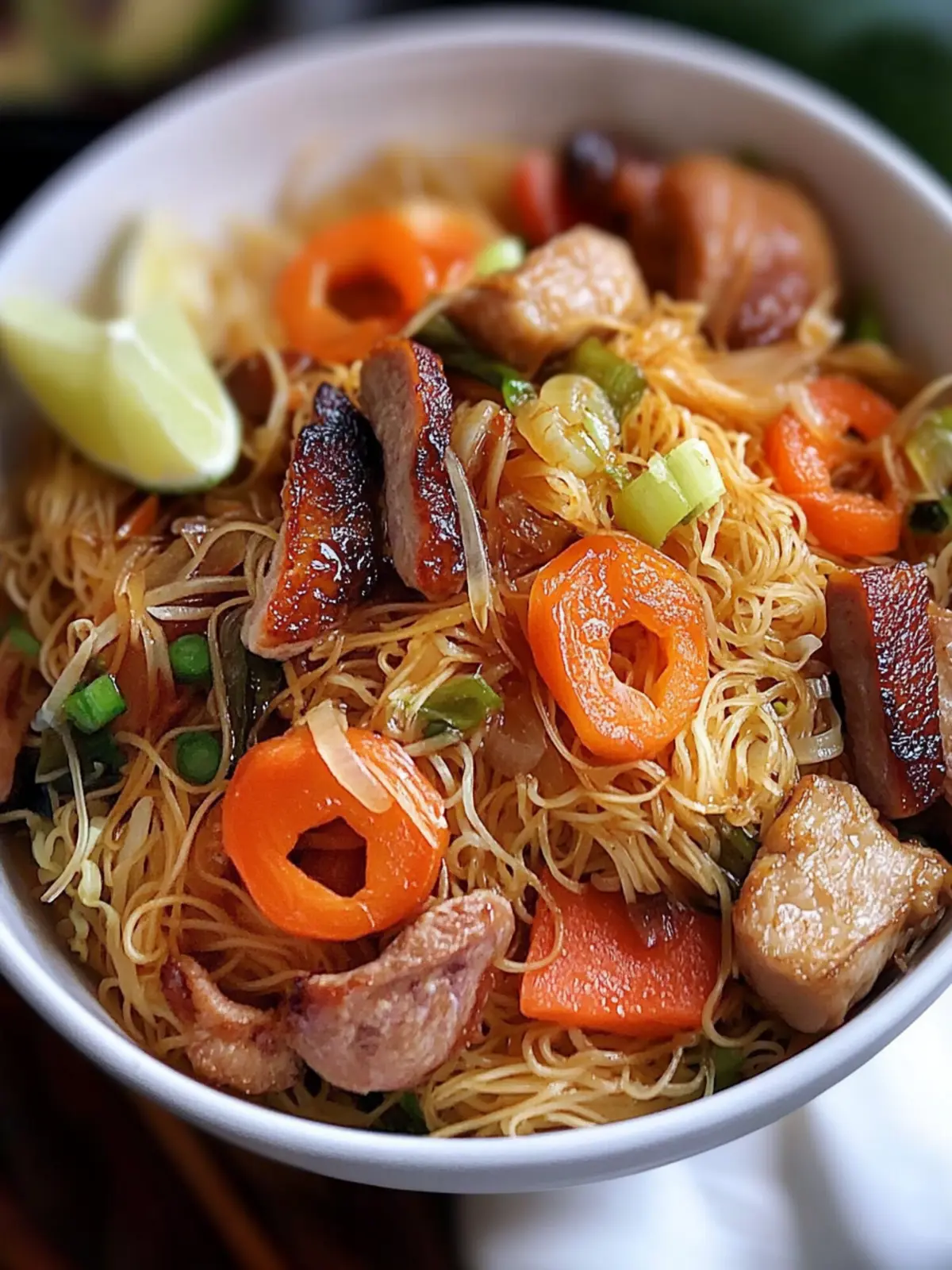
Pancit Bihon Recipe FAQs
What type of pork is best for Pancit Bihon?
Selecting skin-on pork shoulder or pork belly is essential for achieving that rich flavor and tender texture. Avoid overly lean cuts as they can end up dry and chewy. I often recommend that my friends use pork belly for its melt-in-your-mouth quality!
How should I store leftover Pancit Bihon?
Store any leftovers in an airtight container in the refrigerator for up to 3 days. When reheating, add a splash of broth or water to keep the noodles moist and avoid drying them out. Remember, leftovers make for a quick meal on busy nights, so save those extras!
Can I freeze Pancit Bihon?
Absolutely! To freeze, place Pancit Bihon in a freezer-safe container, ensuring it s tightly sealed. It can be stored for up to 2 months. When you’re ready to enjoy it, thaw in the refrigerator overnight before reheating on the stove with a bit of broth or water for moisture.
How do I troubleshoot soggy noodles?
If your noodles come out soggy, you may have soaked them too long in the broth. To avoid this, keep an eye on the noodles and soak them just until they absorb the liquid about 5-7 minutes. If you need to salvage a soggy batch, try sautéing the noodles in a hot pan with a bit of oil to help them crisp up!
Are there any dietary considerations for Pancit Bihon?
Yes! Pancit Bihon is traditionally made with pork, but you can keep it vegetarian by omitting the fish sauce and using tofu or more vegetables. If you re concerned about gluten, opt for tamari instead of soy sauce for a gluten-free version. Always be mindful of any allergies among your guests, and feel free to customize the ingredients as needed!
Can this recipe be made ahead of time?
Absolutely! Pancit Bihon can be made a day in advance. Simply prepare it, let it cool, and refrigerate. When you’re ready to serve, reheat on the stove with a splash of broth or water to refresh the flavors. This is a great time-saver for gatherings and ensures you can enjoy the company of your guests!