
Irresistible Cacio e Pepe Recipe: Quick, Creamy Comfort!
Last Updated on May 8, 2026 by venlarecipez
There s something undeniably comforting about a warm bowl of pasta, especially when it s a classic dish like Cacio e Pepe. Picture this: the rich, creamy notes of Pecorino Romano melt into perfectly cooked spaghetti, mingling with the bold bite of freshly cracked black pepper. It s a dish that transports you straight to the charming streets of Rome, all in just 20 minutes.
When I first decided to whip this up for a quick weeknight dinner, I was amazed at how such a simple combination could result in something so indulgent. With minimal ingredients and effortless preparation, Cacio e Pepe isn t just a meal; it s a reminder that home-cooked comfort can be both delicious and straightforward. Whether you re cooking for yourself or looking to impress loved ones, this dish delivers on flavor and ease in equal measure. Let’s dive into this creamy Roman delight and bring a taste of Italy to your kitchen!
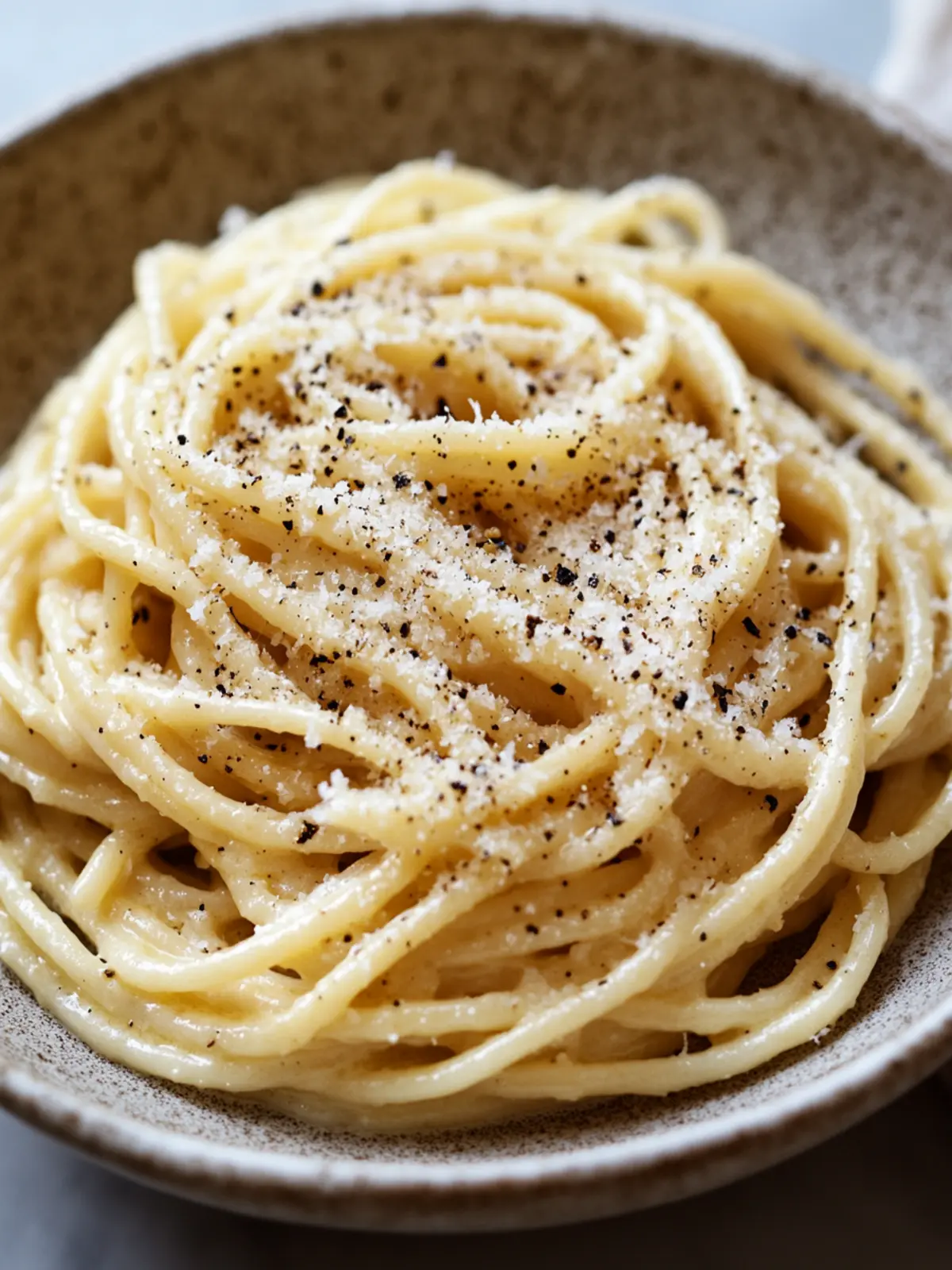
Why is Cacio e Pepe so beloved?
Simplicity at Its Best: This dish requires just a few basic ingredients, making it perfect for even the busiest weeknight dinners.
Creamy Indulgence: The rich Pecorino Romano cheese creates a wonderfully creamy sauce that clings to the pasta, providing a luxurious mouthfeel.
Quick and Easy: Ready in just 20 minutes, it s ideal for those craving comfort food without the fuss.
Crowd-Pleasing Flavor: The delightful kick of freshly cracked black pepper paired with cheese warms the soul, leaving every bowl empty and satisfied.
Perfect for Any Occasion: Whether it s a cozy family meal or an elegant dinner with friends, this classic dish serves as a versatile centerpiece. Enjoy crafting your Cacio e Pepe recipe that s sure to impress!
Cacio e Pepe Ingredients
For the Pasta
Spaghetti or Tonnarelli These traditional pasta choices provide a perfect al dente texture, essential for your Cacio e Pepe recipe.
For the Sauce
Pecorino Romano Cheese Grate finely for a smoother, creamier texture that melds beautifully with the pasta.
Freshly Cracked Black Pepper Adjust according to taste, as this adds a flavorful kick and depth to the sauce.
Salt Use it in the pasta cooking water to enhance flavor right from the first step.
Unsalted Butter (optional) For an extra touch of creaminess, although it can be omitted if you want a lighter dish.
How to Make Cacio e Pepe
Boil the Pasta: Bring a large pot of salted water to a rolling boil. Add the spaghetti or tonnarelli and cook until al dente, usually about 8-10 minutes. Remember to reserve a cup of pasta water before draining.
Mix the Sauce: In a large mixing bowl, combine the finely grated Pecorino Romano cheese with a generous amount of freshly cracked black pepper. Gradually add a few tablespoons of the reserved pasta water, stirring until a creamy sauce forms.
Combine Everything: Once the pasta is drained, immediately toss it with the cheese and pepper mixture. Use additional reserved pasta water as needed to achieve that perfect creamy consistency, making sure every strand of pasta is coated.
Serve Deliciously: Plate your Cacio e Pepe right away for the best texture, topping with extra grated cheese and a sprinkle of black pepper for added flavor.
Optional: Add a drizzle of olive oil for an extra layer of richness.
Exact quantities are listed in the recipe card below.
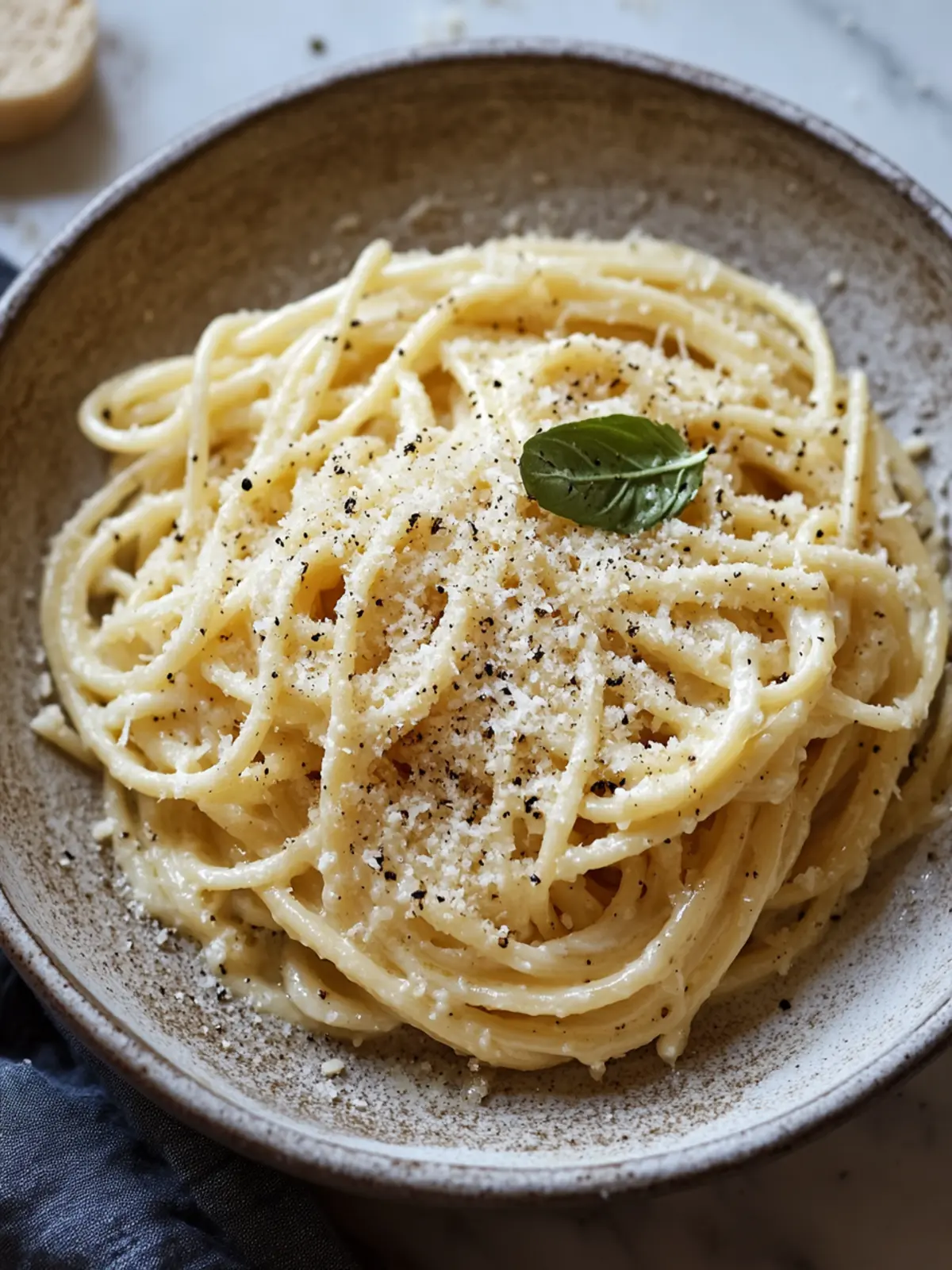
Expert Tips for Cacio e Pepe
Quality Cheese Matters: Always opt for high-quality Pecorino Romano to truly elevate your Cacio e Pepe recipe it makes all the difference in flavor.
Reserve Enough Water: Before draining, ensure you reserve a full cup of pasta water. This starchy water is crucial for achieving that silky sauce consistency.
Avoid Heat Mishaps: Toss the pasta off the heat to prevent the cheese from clumping. Too much heat can ruin the creamy texture you desire.
Pepper Precision: Adjust the amount of black pepper according to your taste preference, but don t skimp it s key for that signature Cacio e Pepe flavor!
Serve Immediately: Enjoy your dish right away for the best experience; Cacio e Pepe is best fresh, as the sauce can thicken when it cools.
Cacio e Pepe Variations
Feel free to play around with these ideas to personalize your Cacio e Pepe for a delightful twist!
Whole Wheat Pasta: Swap spaghetti for whole wheat pasta to add a nutty flavor and health boost. It keeps the comfort while elevating the dish.
Parmesan Alternative: Use freshly grated Parmesan instead of Pecorino Romano for a milder, creamy flavor. This slight change can open new doors of taste while maintaining that satisfying creaminess.
Garlic Infusion: Sauté minced garlic in butter before mixing it with the cheese and pasta. This garlic touch adds a delightful aroma while enhancing the overall flavor profile.
Spicy Kick: Add a pinch of crushed red pepper flakes for those who love an extra kick! The heat beautifully contrasts with the creaminess while giving your dish a warm, exciting edge.
Vegetable Boost: Toss in sautéed spinach or peas for added color and nutrients. These vibrant greens complement the dish beautifully and make it even more hearty.
Nutty Flavor: Sprinkle in some toasted pine nuts for a crunchy texture and a nutty layer of flavor. This intriguing addition makes your classic dish feel gourmet.
Herb Enhancement: Fresh herbs like basil or parsley can bring freshness to the dish. Sprinkle them on just before serving to elevate the entire experience with a burst of color and taste.
Lemon Zest: Add a hint of lemon zest for brightness and tang. This subtle twist can lift the richness, making every bite feel more refreshing.
What to Serve with Cacio e Pepe?
Cacio e Pepe is not just a dish; it’s an experience that calls for the right accompaniments to elevate your meal.
Garlic Bread: The crunchy, buttery texture of garlic bread pairs wonderfully, providing a delightful contrast to the creamy pasta.
Arugula Salad: The peppery notes of arugula tossed with a light vinaigrette refresh the palate, balancing the richness of the sauce.
Roasted Vegetables: Brightly colored roasted veggies bring warmth and earthy flavors to the table, a perfect complement to this dish.
Wine Pairing: A crisp, dry white, like Pinot Grigio, enhances the flavors without overshadowing the cheese’s richness, making every sip enjoyable.
Lemon Zest: A sprinkle of fresh lemon zest on top offers a citrusy brightness that cuts through the creaminess, adding layers of flavor.
Chocolate Mousse: For dessert, a light and airy chocolate mousse provides a sweet finale, wrapping up your meal on a comforting note.
Zucchini Noodles: For a lighter twist, serve zucchini noodles alongside Cacio e Pepe to add texture and a fresh crunch.
Prosciutto-Wrapped Asparagus: The savory, salty prosciutto adds an elegant touch that pairs beautifully with the creamy pasta, enhancing the overall experience.
How to Store and Freeze Cacio e Pepe
- Fridge: Store leftover Cacio e Pepe in an airtight container for up to 2 days. To keep the sauce creamy, reheat gently on low, adding a splash of reserved pasta water.
- Freezer: Although freshly made is best, you can freeze leftovers in an airtight container for up to 1 month. Thaw in the fridge overnight and reheat gently to regain creaminess.
- Reheating: Always reheat on low heat to prevent the sauce from clumping. Stir in a little reserved pasta water for the perfect silky texture.
- Avoid Room Temperature: It s best to avoid keeping Cacio e Pepe at room temperature for more than 2 hours to ensure food safety.
Make Ahead Options
Cacio e Pepe is a fantastic option for meal prep that saves you time on busy weeknights! You can cook the pasta up to 24 hours in advance; simply drain and toss it with a bit of olive oil to prevent sticking. In addition, you can pre-mix the cheese and cracked pepper mixture and store it in the refrigerator. Keep it in an airtight container for up to 3 days for optimal freshness. When you’re ready to serve, reheat the pasta gently in a pan, adding a splash of reserved pasta water and then combining it with the cheese mixture off the heat. This way, you’ll ensure your Cacio e Pepe remains just as delicious and creamy, bringing you the comfort of an Italian classic with minimal effort!
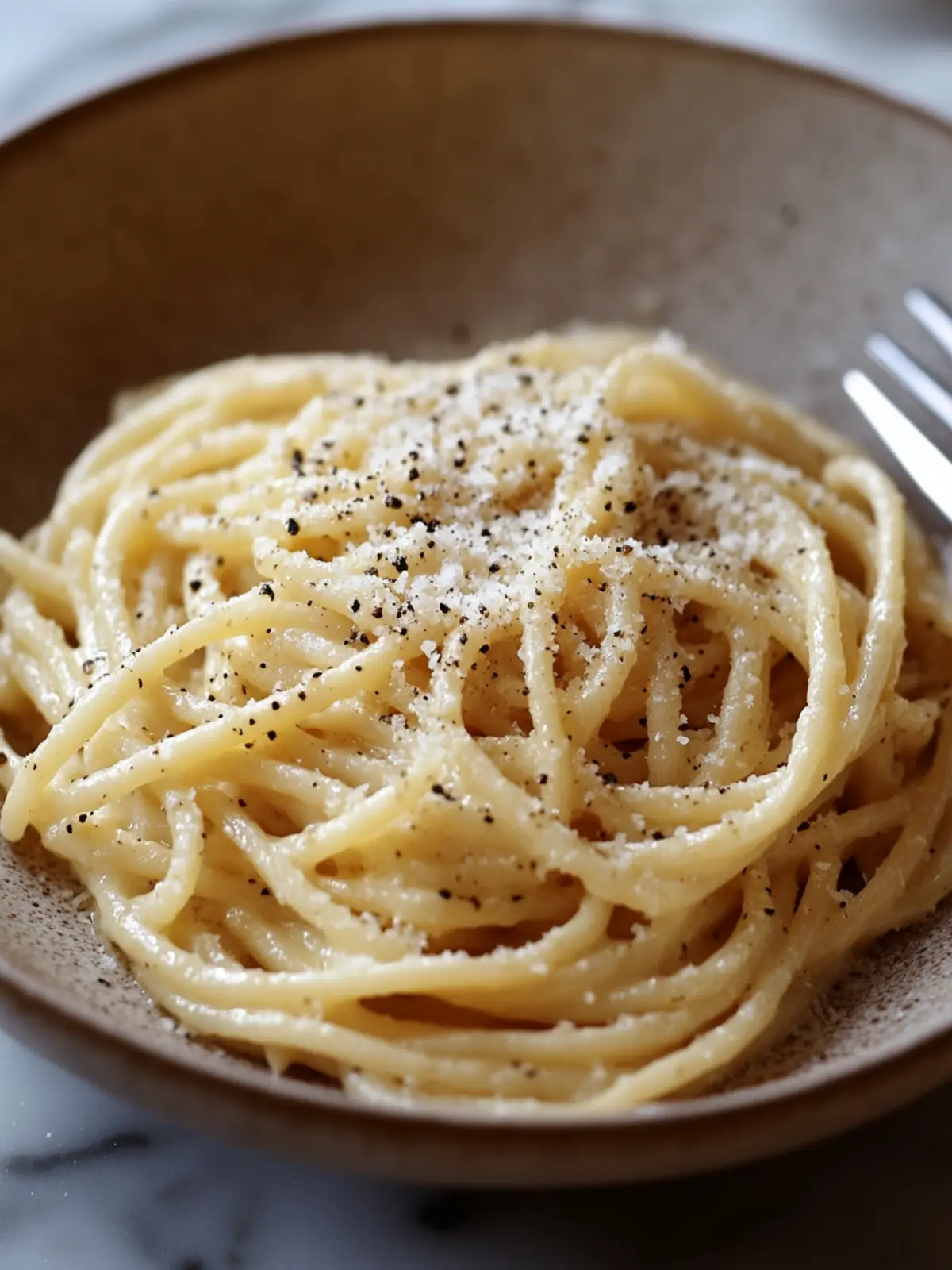
Cacio e Pepe Recipe FAQs
What kind of pasta should I use for Cacio e Pepe?
Absolutely! Traditional options like spaghetti or tonnarelli are ideal for this dish. They provide a perfect al dente texture, which is essential for the creamy sauce to cling beautifully to each strand of pasta.
How long can I store leftovers of Cacio e Pepe?
Very good question! You can store leftover Cacio e Pepe in an airtight container in the fridge for up to 2 days. When ready to enjoy, reheat gently on low heat, adding a splash of reserved pasta water to maintain that creamy texture.
Can I freeze Cacio e Pepe?
Yes, you can! While this dish is best fresh, it can be frozen in an airtight container for up to 1 month. When you re ready to eat, thaw it overnight in the fridge, then reheat gently on low heat, stirring in a bit of reserved pasta water to bring back creaminess.
How can I prevent the cheese from clumping when tossing with the pasta?
To avoid clumping, make sure to toss the pasta off the heat. Once drained, immediately mix it with the cheese and pepper mixture and use reserved pasta water to achieve your desired creamy consistency. If the pasta is too hot and the cheese overheats, it can clump instead of melting into a smooth sauce.
Can I make Cacio e Pepe allergy-friendly?
Certainly! If you re looking to adapt this Cacio e Pepe recipe for dietary restrictions, consider using a dairy-free cheese alternative that melts well. Additionally, you can adjust the level of black pepper or skip it entirely for those with spice sensitivities. Just remember that traditional recipes emphasize the richness of Pecorino Romano, so choose substitutes that mimic a creamy texture.
How can I ensure the pasta is perfectly al dente?
The key to cooking pasta al dente is timing! Follow the package instructions for cooking times closely, checking a minute or two before it s supposed to be done. It should be tender yet firm to the bite. Remember to taste it this is the best way to determine doneness!