
Savory Korean-Style Beef Rice Bowl Ready in 30 Minutes
Last Updated on May 8, 2026 by venlarecipez
After a long day filled with the hustle and bustle of life, there s nothing quite like the comfort of a homemade meal. Picture this: the tantalizing aroma of marinated beef sizzling away in a hot skillet, filling your kitchen with warmth and inviting you to gather around the table. Enter the Quick Korean-Style Beef Rice Bowl a dish that not only delights the senses but also brings a whirlwind of Korean flavors to your dinner table in just 30 minutes.
This recipe is my go-to for those busy weeknights when I crave something quick yet packed with heartwarming flavor. Tender slices of beef are adorned with a vibrant medley of crunchy vegetables and served over a fluffy bed of rice. Topped with a fried egg, this dish transforms a regular evening into a delightful culinary experience. So, whether you re a seasoned chef or a weekend warrior in the kitchen, let s dive into this easy and delicious meal that s sure to become a staple in your household!
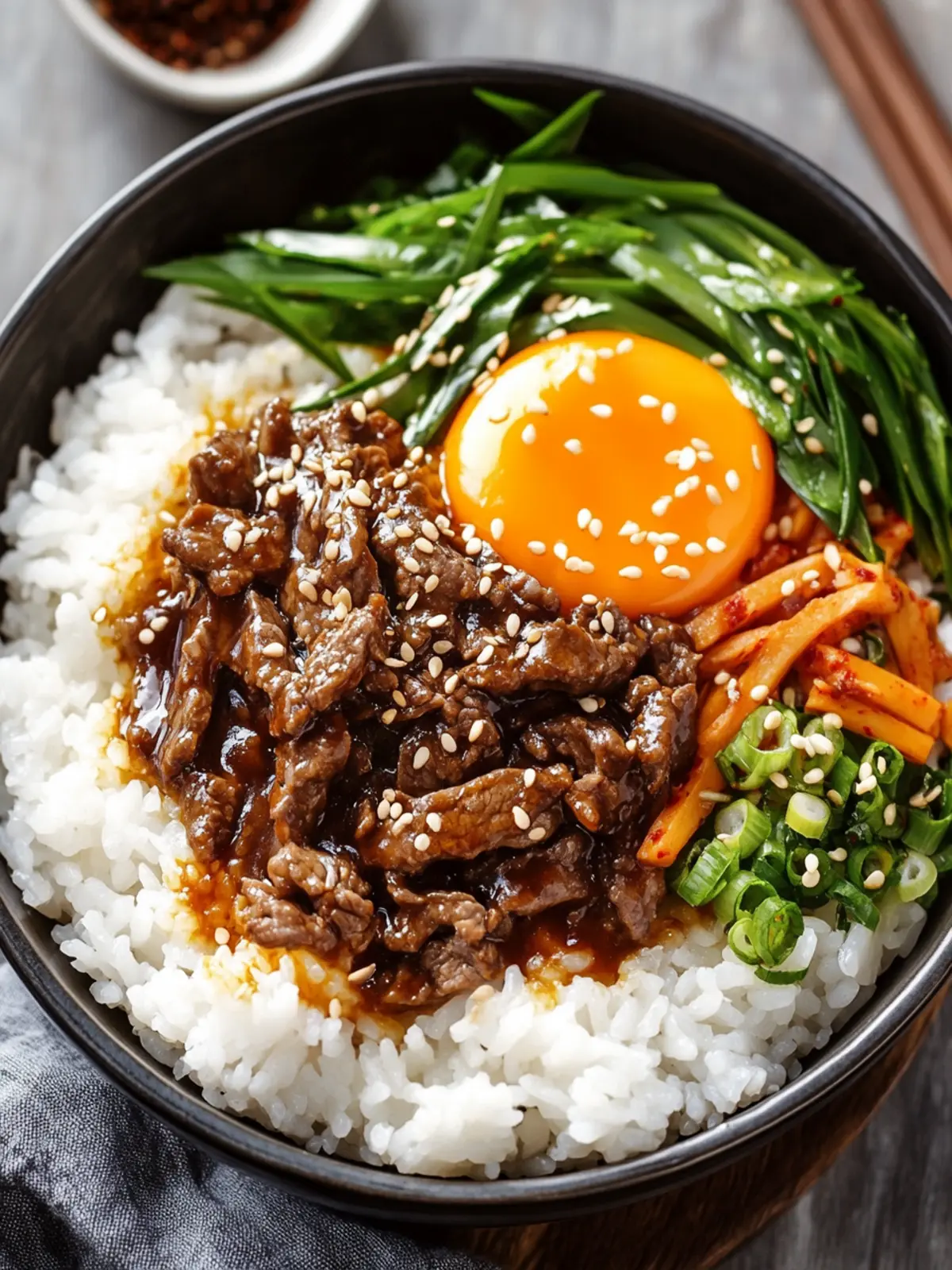
Why is Korean-Style Beef Rice Bowl amazing?
Flavor Explosion: This Korean-Style Beef Rice Bowl bursts with vibrant flavors that blend sweet, savory, and spicy notes.
Quick & Easy: Perfect for weeknight dinners, it comes together in just 30 minutes, making it ideal for busy schedules.
Customizable: Add your favorite vegetables or protein to make it uniquely yours experiment with bulgogi or even a plant-based alternative!
One-Pan Wonder: Minimal cleanup required, as you can use just one skillet for cooking the beef and vegetables.
Crowd-Pleaser: A dish the whole family will love, bringing everyone together to enjoy a hearty, comforting meal.
For a great vegetarian option, check out my vegetable stir-fry recipe.
Korean-Style Beef Rice Bowl Ingredients
For the Beef Marinade
Flank Steak Thinly sliced against the grain to ensure maximum tenderness in your Korean-Style Beef Rice Bowl.
Soy Sauce Adds umami richness; consider low-sodium for a healthier choice.
Brown Sugar Balances out the salty soy sauce; honey is a great substitute if needed.
Sesame Oil Imparts a warm, nutty aroma; you can swap it for olive oil if necessary.
Garlic (minced) Enhances depth of flavor, fresh or jarred will both work wonders.
Ginger (grated) Provides a lovely, spicy warmth; fresh is ideal but dried ginger works in a pinch.
Rice Vinegar Brings a necessary tang to balance the flavors; white vinegar can be used instead.
Gochujang (Korean chili paste) Adds a delightful zap if you like heat; you can skip this if you prefer a milder dish.
For the Bowl Assembly
Cooked Rice Acts as the comforting base; use white or brown rice to suit your preference.
Vegetable Oil Essential for stir-frying; can be replaced with peanut or canola oil if desired.
Carrots (julienned) Adds a nice crunch and sweetness; try rainbow carrots for color variety.
Bell Peppers (sliced) Provides vibrant color and freshness; zucchini or snap peas are good alternatives.
Green Onions (sliced) For garnishing, bringing a pop of brightness and flavor.
Fried Eggs Optional but recommended for creamy richness; you can scramble instead for a change.
Sesame Seeds Perfect for garnish; they offer both visual appeal and delightful crunch.
How to Make Korean-Style Beef Rice Bowl
Marinate the Beef: In a mixing bowl, whisk together soy sauce, brown sugar, sesame oil, garlic, ginger, rice vinegar, and gochujang. Coat the sliced flank steak and let it marinate for at least 15 minutes; for deeper flavor, refrigerate for up to 2 hours.
Cook the Beef: Heat vegetable oil in a skillet over medium-high heat. Add the marinated beef in a single layer and stir-fry for 3-4 minutes until it s nicely browned and cooked through. Remove the beef from the skillet and set aside.
Sauté Vegetables: Using the same skillet, toss in the julienned carrots and sliced bell peppers. Sauté for 3-5 minutes until they’re tender yet still crisp, keeping their vibrant color.
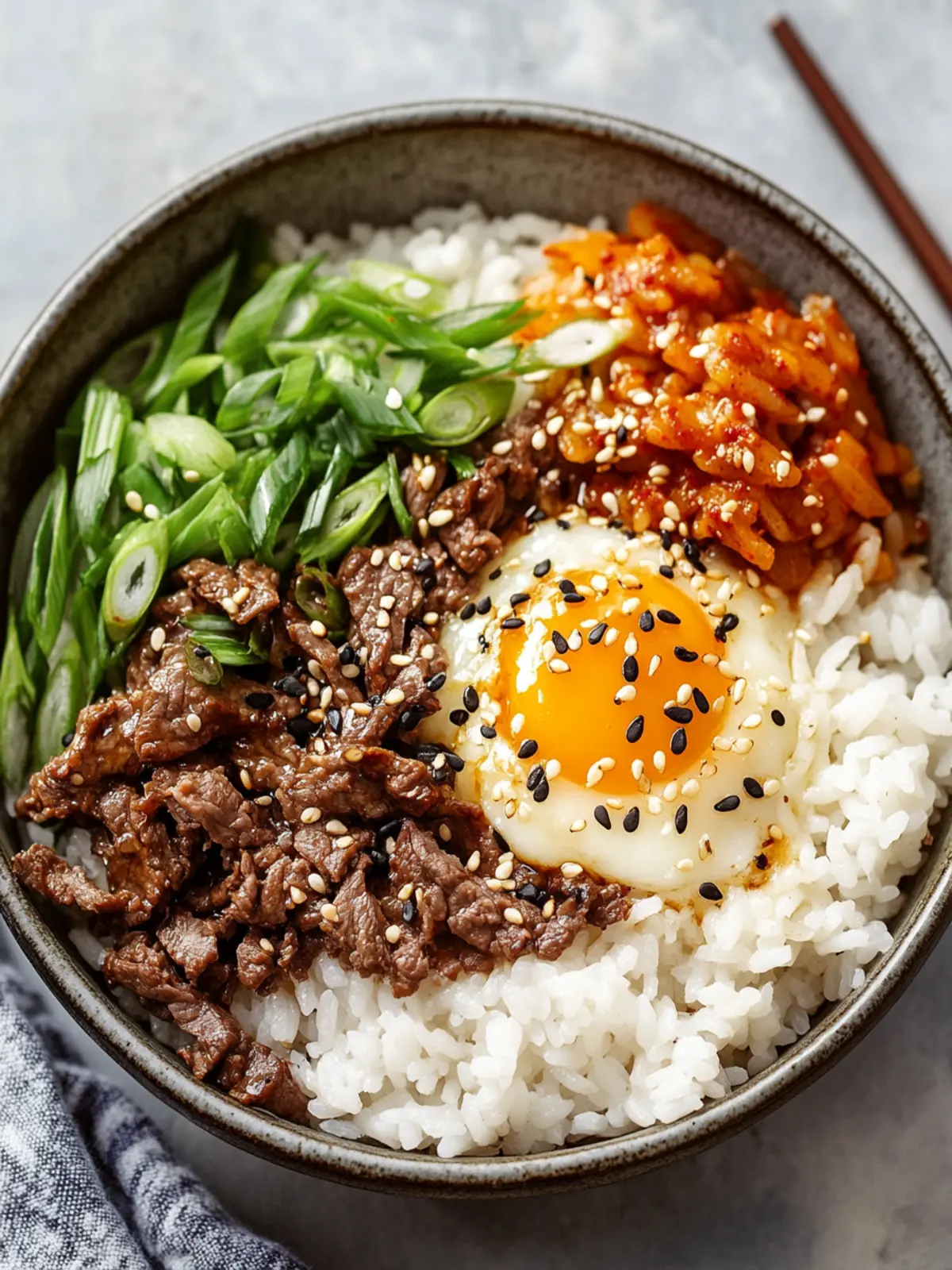
Assemble Bowls: Divide the cooked rice among bowls, then layer on the sautéed vegetables and the beef. For added richness, top each bowl with a fried egg and sprinkle with green onions and sesame seeds for garnishing.
Optional: Drizzle with extra sesame oil for added flavor.
Exact quantities are listed in the recipe card below.
Expert Tips for Korean-Style Beef Rice Bowl
- Marinate Wisely: Let the beef marinate for at least 15 minutes, but 2 hours in the fridge will enhance the flavor more profoundly in your Korean-Style Beef Rice Bowl.
- Skillet Temperature: Make sure your skillet is hot enough before adding the beef. A hot skillet ensures a good sear and prevents steaming.
- Avoid Overcrowding: Cook the beef in batches if necessary; overcrowding the pan can lead to uneven cooking and that desired crispy texture gets lost.
- Tweak the Heat: Adjust the amount of gochujang to suit your spice tolerance. Start with less; you can always add more for extra heat later!
- Resting Time: Allow the beef to rest after cooking for several minutes. This lets the juices redistribute for a more tender bite.
- Fresh Ingredients: Use fresh garlic and ginger when possible. They have a potency that greatly improves the overall taste of your dish.
What to Serve with Korean-Style Beef Rice Bowl?
Enhance your meal experience by pairing the rich flavors of Korean cuisine with delightful sides and beverages that complement this hearty dish.
Kimchi: A classic Korean side dish, this fermented cabbage adds a spicy, tangy crunch that balances the savory beef beautifully. Add it for a refreshing zing!
Steamed Dumplings: Soft and filled with juicy goodness, dumplings provide a delightful contrast to the rice bowl, making each bite more satisfying with layers of flavor.
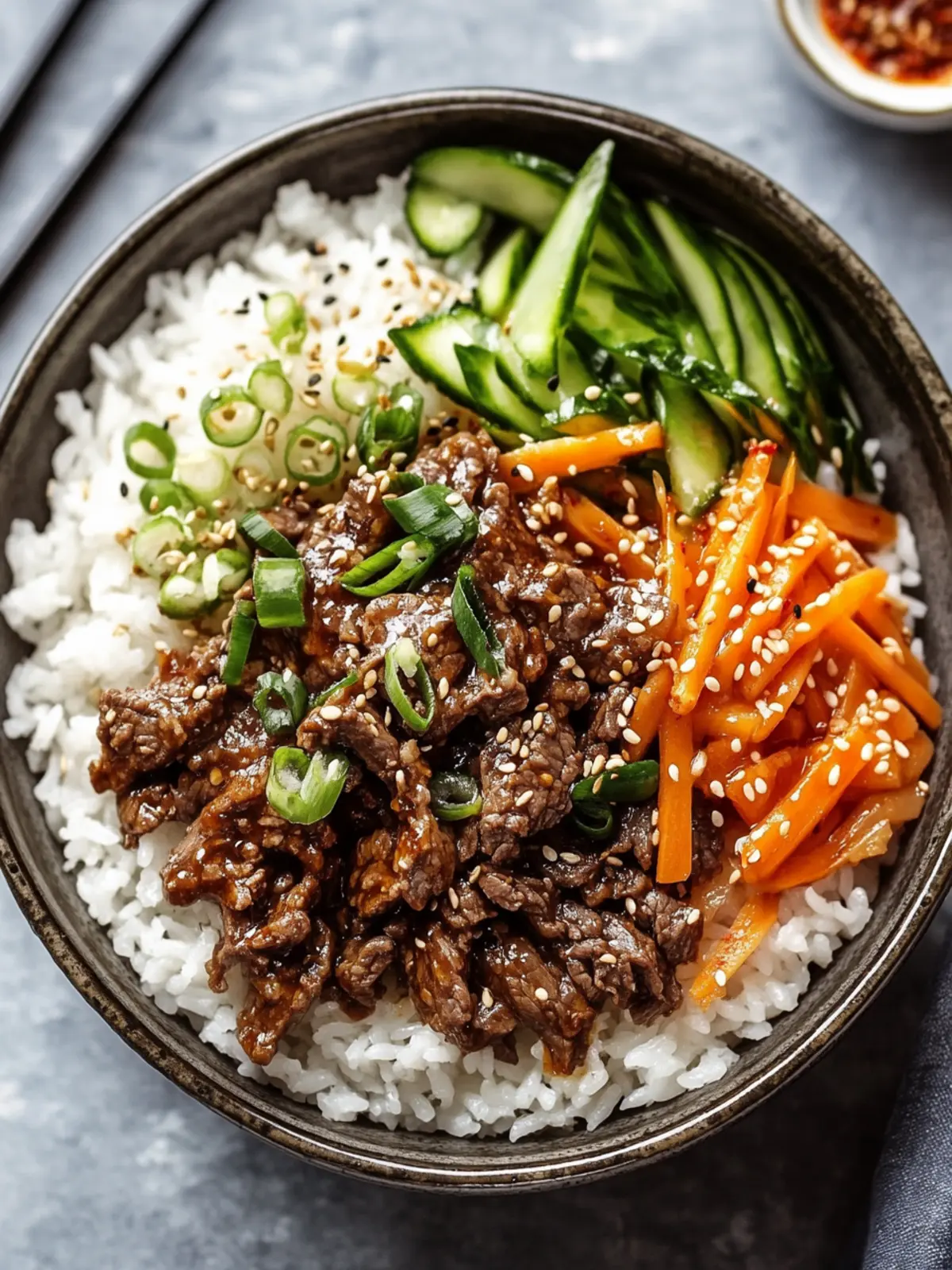
Cucumber Salad: Light and crisp, this salad with a vinegar dressing offers a refreshing contrast, enhancing the beef rice bowl’s rich umami notes and rounding out the meal nicely.
Chilled Soba Noodles: These cold noodles are often tossed in a light sesame or soy-based dressing. Their slightly nutty flavor complements the richness of the beef while providing a delightful texture contrast.
Roasted Vegetables: Roasted sweet potato or broccoli adds a depth of flavor and sweetness that pairs harmoniously with the spicy and savory elements of the dish.
Miso Soup: Warm and comforting, this traditional Japanese soup adds a soothing backdrop to the bold flavors of your Korean-Style Beef Rice Bowl, making it an excellent starter.
Sparkling Water with Lime: A refreshing and palate-cleansing drink that enhances the meal without overpowering the flavors, keeping your dining experience bright and lively.
Green Tea: The earthy notes of green tea provide a serene finish to your meal, complementing the flavors while aiding digestion after a hearty dinner.
Storage Tips for Korean-Style Beef Rice Bowl
Fridge: Store leftovers in an airtight container for up to 3 days. Make sure to cool the bowl to room temperature before sealing to preserve freshness.
Freezer: Freeze components separately, such as beef and vegetables, for up to 2 months. Ensure they are in airtight containers or freezer bags to prevent freezer burn.
Reheating: When ready to enjoy, thaw overnight in the fridge if frozen, then reheat in a skillet over medium heat until heated through. Enjoy your Korean-Style Beef Rice Bowl hot for the best flavor!
Serving Idea: For a quick touch-up, drizzle some additional sesame oil or fresh green onions before serving to refresh the flavors.
Make Ahead Options
These Korean-Style Beef Rice Bowls are perfect for busy weeknight meal prep! You can marinate the flank steak up to 24 hours in advance; simply whisk together the marinade and coat the beef, then refrigerate it for optimal flavor. Additionally, chop your vegetables (carrots, bell peppers, and green onions) a day ahead and store them in airtight containers in the fridge for freshness. When you’re ready to enjoy your meal, stir-fry the marinated beef and vegetables, cook the rice, and assemble the bowls. With these prep steps, you’ll save precious time and enjoy a flavorful dish just as delicious as if you made it from scratch in the moment!
Korean-Style Beef Rice Bowl Variations
Feel free to get creative with this recipe and make it your own while enjoying a world of delectable flavors!
Protein Swap: Use bulgogi, chicken, or even tofu for a different protein twist. Each option brings its own unique flavor profile to the dish.
Vegetable Boost: Toss in veggies like broccoli or snap peas for extra crunch and nutrients. They pair wonderfully with the beef, adding vibrant color!
Healthy Rice Alternatives: Try quinoa or cauliflower rice instead of traditional rice for a lower-carb option. These swaps maintain the dish’s essence while enhancing nutritional value.
Extra Toppings: Consider garnishing with kimchi or avocado to amplify flavor and creaminess. These additions take the dish to another level of deliciousness.
Spice Level Adjustments: Increase the gochujang for more heat or substitute it with sriracha for a different kick. Tailor it to your preferred spice level!
Different Oils: Swap sesame oil for peanut oil or olive oil to determine your favorite oil’s impact on the flavor profile. Each brings a new twist to the dish!
Rice Variations: Use flavored rice, such as coconut rice or turmeric rice, for an exciting base. These flavors add depth and personality to your meal.
Korean-Style Beef Rice Bowl Recipe FAQs
Can I use different cuts of beef?
Absolutely! While flank steak is my go-to for its tenderness, you can also use sirloin, ribeye, or even ground beef for a different texture. Just remember, slicing against the grain ensures each bite is still tender.
How should I store leftovers?
Great question! Store your Korean-Style Beef Rice Bowl leftovers in an airtight container for up to 3 days in the refrigerator. Make sure they cool to room temperature before sealing to keep everything fresh.
Can I freeze the Korean-Style Beef Rice Bowl?
Yes, you can freeze the components separately for instance, the beef and vegetables up to 2 months. Just use airtight containers or freezer bags to avoid freezer burn. When ready to enjoy, thaw overnight in the fridge and reheat in a skillet over medium heat until heated through.
What if I can t find gochujang?
No worries! If gochujang isn t available, you can substitute it with a mix of regular chili paste and a bit of sugar or simply omit it if you prefer a milder flavor. Just adjust the other seasonings to achieve the balance you like!
Is this dish suitable for my gluten-free diet?
Absolutely! You can easily make your Korean-Style Beef Rice Bowl gluten-free by using tamari instead of soy sauce. Just double-check that all your other ingredients are gluten-free too.
How can I boost the nutritional value of this dish?
Adding more vegetables is a fantastic way to enhance nutrition! Consider adding steamed broccoli, snap peas, or spinach. You could also swap in quinoa or cauliflower rice to pack in more fiber and nutrients for a healthier option.