
Savory Pork Adobo: A Delicious Filipino Comfort Dish
Last Updated on May 8, 2026 by venlarecipez
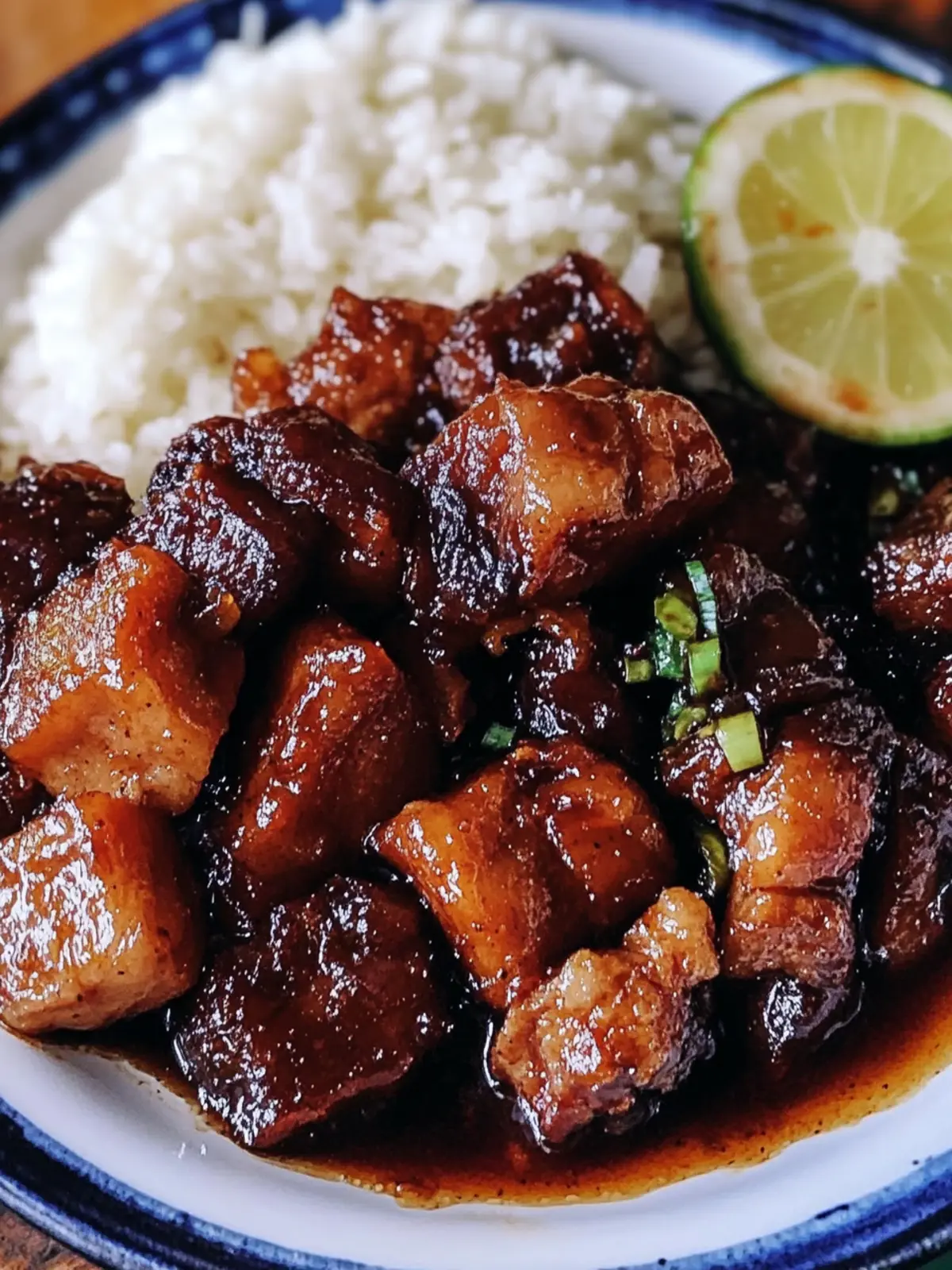
When my taste buds crave a bit of adventure, there’s one dish that never fails to deliver: Pork Adobo. This Filipino classic envelops tender chunks of pork in a savory symphony of sweet, salty, and tangy flavors that dance in harmony with every bite. The first time I attempted to make this dish, my kitchen filled with a heavenly aroma as the pork slowly simmered away, transforming into a rich, glossy sauce that clings beautifully to each forkful.
What sets this Pork Adobo apart is not just the blend of simple, accessible ingredients soy sauce, vinegar, and a hint of ginger but the way it permits my culinary spirit to unwind. It’s the perfect remedy for those evenings when fast food just won t cut it. As it patiently braises, the meal is elevated from ordinary to extraordinary, inviting everyone to gather around the table and enjoy a taste of comfort that feels like home. Armed with leftovers that often taste even better the next day, this recipe might just become the highlight of your weeknight meals.

Why is Pork Adobo the Ultimate Comfort Food?
Tender Pork: This dish features succulent pieces of pork that melt in your mouth, making every bite a joy.
Aromatic Sauce: The rich sauce, crafted from soy sauce and vinegar, creates a perfect balance of flavors that leaves you wanting more.
Slow-Cooked Goodness: With just a little prep, you can set it to simmer and let the magic happen, freeing you for other tasks.
Versatile Dish: Swap in chicken for a lighter option, or customize the spice level based on your taste preferences.
Crowd-Pleasing: Perfect for family dinners, this captivating dish is sure to impress even the pickiest eaters! For more delightful variations, check out the tips in our Variation Ideas.
Pork Adobo Ingredients
Discover the essential ingredients that create the magic of Pork Adobo.
For the Marinade
- Low-sodium Soy Sauce Offers umami flavor and saltiness; substitute with regular soy sauce, adjusting water accordingly.
- Distilled White Vinegar or Apple Cider Vinegar Provides acidity that balances the savory and sweet notes.
- Dark Brown Sugar This sweetener adds depth and richness to the sauce.
- Fish Sauce Enhances the overall umami profile for a more complex flavor.
- Sriracha (optional) Adds a kick of heat for those who enjoy a spicy touch.
- Fresh Ginger (grated) Infuses aromatic warmth and a hint of spice to elevate the dish.
For the Main Dish
- Skin-On Pork Shoulder The star of the show, ideal for its tender texture and rich flavor when slow-braised.
- Virgin Coconut Oil Used for sautéing and lends a subtle coconut taste.
- Yellow Onions Their sweetness and aroma provide a flavorful base for the dish.
- Garlic (smashed) Adds depth and savory notes to the marinade and overall dish.
- Dried Ancho Chile (optional) Introduces an additional layer of flavor and spice.
- Black Peppercorns Provides delightful pops of spice throughout the dish.
- Kosher Salt Essential for bringing out the natural flavors of the ingredients.
- Bay Leaves Infuse the braising liquid with herbal aroma.
- Water Creates the necessary liquid for braising the pork until beautifully tender.
- MSG (optional) Helps to enhance the overall flavor profile, making every bite luscious.
For Serving
- Cooked Rice The perfect accompaniment to soak up the rich sauce, complementing each flavorful bite.
How to Make Pork Adobo
Marinate the Pork: In a large bowl, combine low-sodium soy sauce, vinegar, brown sugar, fish sauce, sriracha (if using), and grated ginger. Toss in the pork and let it marinate for as long as possible, ideally overnight, for maximum flavor infusion.
Sauté Vegetables: Heat virgin coconut oil in a large pot over medium heat. Add sliced yellow onions and smashed garlic, sautéing until they are softened and fragrant about 3-4 minutes, creating a welcoming base for the dish.
Braise the Pork: Add the marinated pork along with its marinade, black peppercorns, bay leaves, and enough water to cover the pork. Bring this mixture to a boil, then reduce the heat to low, allowing it to simmer gently for at least 1 hour or until the pork is tender and the sauce thickens.
Finish: Once tender, taste the sauce and adjust seasoning with kosher salt and optional MSG if desired. Serve your luscious Pork Adobo hot over fluffy cooked rice, letting the warming aroma envelop your meal.
Optional: Garnish with chopped green onions for a fresh touch.
Exact quantities are listed in the recipe card below.
How to Store and Freeze Pork Adobo
Fridge: Store leftover Pork Adobo in an airtight container for up to 3 days. The flavors deepen as it rests, making it even more delicious.
Freezer: You can freeze Pork Adobo for up to 3 months. Ensure it’s in a freezer-safe container, and let it cool before sealing to avoid condensation.
Reheating: When ready to enjoy, reheat gently on the stovetop or in the microwave until warmed through. Adding a splash of water can help maintain moisture.
Thawing: For best results, thaw overnight in the refrigerator before reheating; this keeps the pork tender and flavorful.
Make Ahead Options
These Pork Adobo make-ahead options are perfect for busy home cooks looking to save time without sacrificing flavor! You can marinate the pork in the soy sauce mixture for up to 24 hours in advance, allowing the flavors to deeply penetrate the meat. The sautéed onions and garlic can also be prepared ahead of time and stored in the refrigerator for up to 3 days. To maintain the quality, keep the pork and sautéed veggies separate until you’re ready to braise the dish. When it’s time to serve, combine the marinated pork, sautéed vegetables, and remaining ingredients, then braise until tender. This way, you’ll have a comforting meal ready with minimal effort on those busy weeknights!
Expert Tips for Pork Adobo
Marinate Well: Ensure the pork is marinated for several hours or overnight to fully absorb the flavors and enhance the richness of the Pork Adobo.
Watch the Heat: Avoid boiling the pork too vigorously; a gentle simmer allows it to become tender without toughening the meat.
Skim Fat: As it cooks, skim excess fat from the surface to achieve a lighter sauce without losing flavor.
Adjusting Spice: If you prefer a milder dish, reduce or omit the sriracha and ancho chile to keep the Pork Adobo perfectly balanced.
Storage Quality: This dish often tastes better the next day, making it a great candidate for leftovers; simply reheat gently for the best results.
Pork Adobo Variations
Feel free to shake things up with these delightful ideas that will add a personal touch to your Pork Adobo journey.
- Chicken Swap: Use chicken thighs instead of pork for a lighter, yet equally tasty, adobo experience.
- Vinegar Variety: Experiment with coconut vinegar for a uniquely tropical twist that enhances the dish’s authenticity.
- Spicy Delight: Elevate the heat by adding fresh red chilies or extra sriracha to cater to your spice-loving palate.
- Sweet & Tangy: Swap dark brown sugar for palm sugar for a subtle sweetness that beautifully complements the savory notes.
- Herbal Infusion: Toss in fresh thyme or cilantro during the braising process for a burst of vibrant flavor and freshness.
- Texture Boost: Incorporate diced sweet potatoes or carrots for added sweetness and a heartier texture that your family will love.
- Coconut Cream: For a creamy twist, stir in a dollop of coconut cream towards the end of cooking for a richer sauce.
Each variation is a beautiful way to make this classic recipe your own, turning every meal into a warm, aromatic delight!
What to Serve with Pork Adobo?
Elevate your meal experience by pairing delightful sides with this savory and aromatic dish that everyone will love.
Steamed Jasmine Rice: The fluffy grains soak up the rich sauce, creating a perfect bite of flavor that doesn t overpower the adobo.
Garlic Fried Rice: A fragrant twist that adds crunch and depth, enhancing the meal with its bold flavor profile.
Stir-Fried Vegetables: Bright, tender veggies like bell peppers and snap peas bring a pop of color and fresh contrast to the warm adobo.
Cucumber Salad: Light and refreshing, this cool salad complements the savory richness of the pork while offering a crunchy texture.
Pineapple Chunks: The natural sweetness of pineapple balances the salty and tangy notes of the dish, creating a lovely contrast.
Adobo Tacos: Use leftover pork in soft tortillas with cabbage slaw for a fun, hands-on meal that embraces all the savory flavors of adobo.
Cold Beer or Coconut Water: A chilled drink that refreshes your palate will perfectly accompany the rich and savory notes of your Pork Adobo.
Leche Flan: End your meal on a sweet note with this creamy dessert. Its caramel flavor will be a delightful contrast to the savory experience.

Savory Filipino Pork Adobo Recipe FAQs
How do I select the best pork for my Adobo?
To select the best pork for your Pork Adobo, look for skin-on pork shoulder with some marbling. This type of pork will become tender and flavorful when braised. The marbling allows for delicious fat content that enhances the overall dish.
How should I store leftover Pork Adobo?
Store leftover Pork Adobo in an airtight container in the refrigerator for up to 3 days. Make sure it s cooled down completely before sealing to preserve its flavor and integrity. The longer it sits, the more the flavors deepen, often making it even tastier!
Can I freeze my Pork Adobo?
Absolutely! Pork Adobo can be frozen for up to 3 months. Simply let it cool, then transfer to a freezer-safe container. When ready to enjoy, thaw it overnight in the fridge, then reheat gently on the stovetop or in the microwave, adding a splash of water to maintain moisture.
What should I do if my Adobo sauce is too salty?
If your sauce turns out too salty, you can balance it by adding a bit of water or unsalted chicken broth to dilute the saltiness. You could also add a tablespoon of sugar to counteract the saltiness, enhancing the flavor profile without compromising the dish.
Can I adjust the spice level in my Pork Adobo?
Very much so! You can easily adjust the spice level by modifying the amount of sriracha or omitting the dried ancho chile altogether. For a mild version, start with just a hint of sriracha or simply use your favorite spices that offer flavor without heat.
Is Pork Adobo safe for pets?
Pork Adobo contains ingredients such as garlic and soy sauce that aren’t safe for pets, particularly dogs and cats. It’s best to keep this savory dish for human enjoyment and seek pet-friendly meal options for your furry friends!